










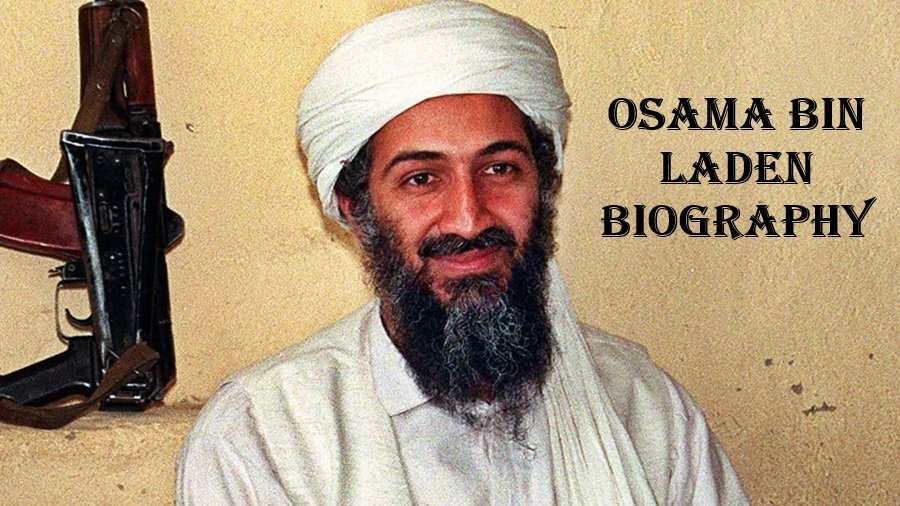
Introduction: Osama Bin Laden Biography
The story of Osama bin Laden is one of the most controversial and consequential narratives in modern-day international records. His existence intersected with geopolitics, faith, worldwide terrorism, and international war in techniques that reshaped the twenty-first century. This centered Osama bin Laden biography explores his early years, ideological development, founding of al-Qaeda, position within the Sept. 11 attacks, and the U.S. operation that brought on his lack of existence.
This article offers a whole and real evaluation, which consists of essential dates, key activities, and historic context in table shape, along with aspect FAQs for better information.
Early Life and Family Background
Osama bin Laden was born on March 10, 1957, in Riyadh, Saudi Arabia. He came from a wealthy and influential family. His father, Mohammed bin Laden, became a rich manufacturing person who based the Saudi Binladin Group, one of the most crucial construction agencies within the Middle East.
Family and Wealth
The bin Laden circle of relatives had near ties to the Saudi royal family. Osama ends up being one of more than 50 children. Despite growing up in wealth and privilege, his later life took a notably excellent course.
| Detail | Information |
|---|---|
| Full Name | Osama bin Mohammed bin Awad bin Laden |
| Date of Birth | March 10, 1957 |
| Place of Birth | Riyadh, Saudi Arabia |
| Nationality | Saudi |
| Father | Mohammed bin Laden |
| Mother | Alia Ghanem |
| Education | King Abdulaziz University |
Education and Ideological Influence
Osama studied economics and business administration at King Abdulaziz University in Jeddah. During this time, he modified into inspiration through Islamist university students and radical ideologies. One of the essential elements ideological effects have come to be is the idea of global jihad and the perception that Western powers have been interfering in Muslim lands.
The geopolitical surroundings at the end of the nineteen seventies accomplished a vital function in shaping his worldview, especially the Cold War tensions between the United States and the Soviet Union.
Afghan-Soviet War and Rise to Prominence
In 1979, the Soviet Union invaded Afghanistan. This occasion has become a turning aspect in Osama bin Laden’s life.
Move to Afghanistan
Bin Laden traveled to Afghanistan to help the Afghan Mujahideen combat Soviet forces. He used his wealth to finance recruitment, guns, and logistics.
The Afghan warfare allowed him to
- Build a community of fighters
- Gain battlefield enjoyment.
- Establish international connections
- Strengthen his ideological willpower
By the overdue 1980s, after the Soviet withdrawal, he had a superior, first-rate impact amongst militant Islamist circles.
Formation of Al-Qaeda
In 1988, Osama bin Laden primarily based al-Qaeda, which interprets to “The Base.” Initially created as a logistical community for jihad combatants, it advanced right, right, right into a global terrorist business enterprise.
Objectives of Al-Qaeda
- Expel Western impact from Muslim nations
- Overthrow governments seen as corrupt or Western-aligned
- Establish a strict interpretation of Islamic governance
The employer later orchestrated several assaults worldwide.
| Year | Event |
|---|---|
| 1979 | Soviet invasion of Afghanistan |
| 1988 | Formation of al-Qaeda |
| 1996 | Declaration of jihad against the United States |
| 1998 | U.S. Embassy bombings in Kenya and Tanzania |
| 2001 | September 11 attacks |
Return to Saudi Arabia and Exile
After the Afghan struggle, bin Laden decreased his lower back to Saudi Arabia. However, tensions grew while he criticized the Saudi authorities for allowing U.S. troops to be stationed within the U.S.A. Throughout the Gulf War.
Eventually:
- His Saudi citizenship is revoked.
- He changed into an expatriate from the United States.
- He relocated to Sudan and later decreased lower back to Afghanistan.
1998 U.S. Embassy Bombings
In 1998, coordinated truck bombings focused on U.S. embassies in Nairobi, Kenya, and Dar es Salaam, Tanzania. These assaults killed over two hundred humans and injured thousands.
Following the one’s bombings,
- The United States indicted bin Laden.
- The FBI positioned him on its most-wanted list.
- A global manhunt commenced.
The 9-11 Attacks
The most defining 2D in Osama bin Laden’s biography is the Sept. 11, 2001 terrorist assaults.
On that day:
- Four commercial enterprise airplanes had been hijacked.
- Two planes struck the World Trade Center in New York.
- One hit the Pentagon.
- One crashed in Pennsylvania.
Nearly 3,000 humans were killed.
The administration of George W. Bush declared a global “War on Terror” in reaction.
Impact of Sep 11
- U.S. Invasion of Afghanistan
- Creation of Department of Homeland Security
- Expansion of global counterterrorism efforts
- Long-time period wars in the Middle East
Life in Hiding
After 2001, bin Laden went into hiding. For years, intelligence groups searched for him across Afghanistan and Pakistan.
Eventually, he has become positioned in Abbottabad, a metropolis in Pakistan.
Operation Neptune Spear
On May 2, 2011, U.S. Navy SEALs completed Operation Neptune Spear under the administration of Barack Obama.
The operation came about in Abbottabad.
Key Details
| Detail | Information |
|---|---|
| Date | May 2, 2011 |
| Location | Abbottabad, Pakistan |
| Conducted By | U.S. Navy SEAL Team 6 |
| Outcome | Osama bin Laden killed |
| Body Disposition | Buried at sea |
His death marked a major milestone in the War on Terror.
Ideology and Motivations
Bin Laden framed his movements as defensive jihad inside the path of Western aggression. However, his techniques—focused on civilians and attractive in mass-casualty attacks—had been significantly condemned globally.
His ideology covered:
- Opposition to U.S. Overseas insurance
- Rejection of Western culture has an impact on
- Advocacy for a strict Islamic america
Many Muslim scholars rejected his interpretation of Islamic teachings.
Global Impact and Legacy
Osama bin Laden’s movements reshaped international politics.
Political Effects
- U.S.-led invasions of Afghanistan and Iraq
- Strengthening of global surveillance systems
- Rise of counterterrorism crook suggestions worldwide
Social Effects
- Increased Islamophobia in a few regions
- Heightened airport safety features
- Global debates on civil liberties vs. Protection
Timeline Summary
| Year | Major Event |
|---|---|
| 1957 | Born in Riyadh |
| 1979 | Soviet invasion of Afghanistan |
| 1988 | Founded al-Qaeda |
| 1998 | U.S. Embassy bombings |
| 2001 | 9/11 attacks |
| 2011 | Killed in Abbottabad |
Psychological and Strategic Analysis
Experts endorse that Osama bin Laden changed into a pretty strategic, affected, and media-conscious person. He understood symbolic desires and international messaging. His recorded video messages were carefully timed to persuade political activists.
However, his movements, moreover, added approximately devastating results for masses of hundreds, which encompass instability inside the Middle East and the deaths of countless civilians.
Media Representation
Over the years, bin Laden has been portrayed in documentaries, books, and films studying terrorism and global safety. These portrayals purpose to understand—not glorify—his impact on statistics.
Important Facts at a Glance
| Category | Information |
|---|---|
| Net Worth (Estimated) | Millions from family inheritance |
| Organization | al-Qaeda |
| Most Notorious Event | September 11 attacks |
| Years in Hiding | Approximately 10 years |
| Age at Death | 54 years |
Lessons from History
The biography of Osama bin Laden highlights several important instructions:
- The electricity of ideology in shaping global activities.
- The outcomes of geopolitical conflicts.
- The importance of intelligence cooperation.
- The extended-time period impact of terrorism on global society.
Frequently Asked Questions
1. Who turned out to be Osama bin Laden?
Osama bin Laden grew to be the founder of al-Qaeda and the mastermind behind the 9/11 attacks in 2001.
2. Where was modified into Osama bin Laden born?
He was born in Riyadh, Saudi Arabia.
3. What modified into al-Qaeda?
Al-Qaeda is a militant Islamist agency responsible for more than one terrorist assault globally.
4. When did the 11th of September attacks occur?
They came about on September 11, 2001.
5. How did Osama bin Laden die?
He changed into killed with the useful resource of U.S. Navy SEALs sooner or later in Operation Neptune Spear in Abbottabad, Pakistan, on May 2, 2011.
6. Why did the U.S. invade? Afghanistan?
The invasion came to be launched to dismantle al-Qaeda and do away with the Taliban authorities that harbored bin Laden.
7. What changed in his nationality?
He became at the start a Saudi citizen, despite the truth that his citizenship was modified and later revoked.
8. How long has he been in hiding?
Approximately a decade after the Sep 11 attacks.
Conclusion
This comprehensive Osama bin Laden biography demonstrates how one character’s ideology and moves profoundly stimulated international politics, safety guidelines, and the international circle of relatives’ contributors. From his adolescence in Saudi Arabia to the founding of al-Qaeda and the tragic occasion of 9/11, his story stays essential to expertise on present-day terrorism and the War on Terror.