







Introduction: Napoleon Biography Andrew Roberts
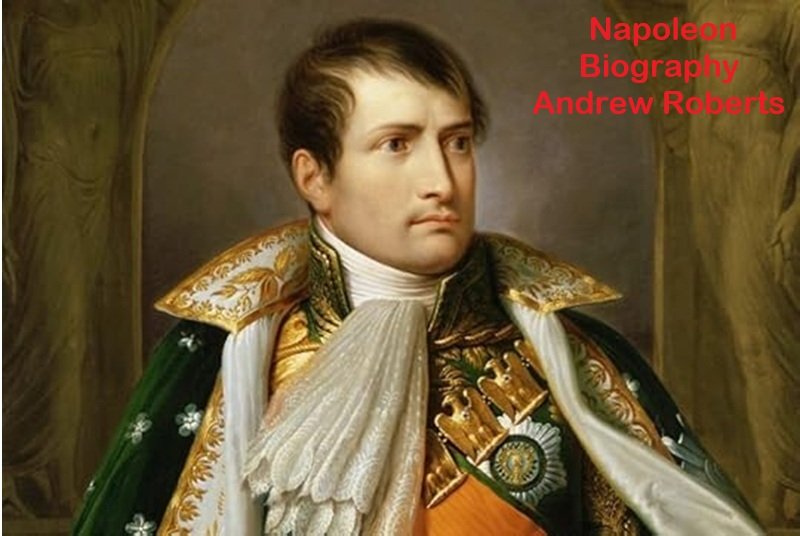
Napoleon Biography Andrew Roberts (1769–1821) changed right into a French army general and statesman who rose to prominence in some unspecified time in the future of the French Revolution. He ultimately crowned himself Emperor of the French and reshaped Europe through conquest, reform, and current governance structures.
His existence is a dramatic tale of ambition, genius, reform, struggle, exile, comeback, and very last defeat. For centuries, historians have debated whether he turned into a tyrant or a visionary modernizer. Andrew Roberts’ biography targets to revisit this debate the use of glowing research and newly to be had assets.
About Andrew Roberts
Andrew Roberts is a reputable British historian identified for his precise and balanced biographies of most important historical figures. He acquired global reputation for his art work on statesmen and navy leaders.
In writing Napoleon: A Life, Roberts accessed masses of letters written thru Napoleon, which includes correspondence that had no longer been truly explored with the useful resource of previous historians. His biography annoying situations many myths and affords Napoleon not merely as a conqueror however as a reformer and highbrow.
Overview of the Book: Napoleon – A Life
Andrew Roberts’ biography spans Napoleon’s entire adventure — from his begin in Corsica to his very last days in exile on Saint Helena. The e book combines political statistics, army assessment, mental insight, and social reform assessment.
Key Features of the Biography:
- Based on over 33,000 letters written via Napoleon
- Balanced assessment of victories and screw ups
- Focus on administrative and jail reforms
- Debunking of not unusual myths
- Examination of Napoleon’s individual and leadership fashion
Roberts gives Napoleon Biography Andrew Roberts as a complex man or woman — bold however hardworking, authoritarian yet meritocratic, ruthless but visionary.
Early Life of Napoleon Bonaparte
Napoleon Biography Andrew Roberts have end up born in Corsica in 1769, quick after the island have end up part of France. His own family belonged to minor Italian the Aristocracy. He became despatched to France for military training at a younger age.
Andrew Roberts highlights how Napoleon’s outsider repute in French society formed his pressure for fulfillment. His education at military academies knowledgeable him in artillery, arithmetic, and strategic wondering.
Early Influences:
- Enlightenment mind
- French Revolutionary politics
- Military difficulty
- Personal ambition
Napoleon speedy rose sooner or later of the chaos of the French Revolution due to his intelligence and bold choice-making.
Rise During the French Revolution
The French Revolution created possibilities for gifted humans to rise rapid. Napoleon distinguished himself during the Siege of Toulon in 1793 and later suppressed a royalist rebellion in Paris.
Roberts explains how Napoleon’s loyalty to the revolutionary authorities helped him benefit accept as true with and authority. His Italian Campaign (1796–1797) have become him proper right into a countrywide hero.
Italian Campaign Highlights:
- Defeated Austrian forces
- Demonstrated fast maneuver battle
- Inspired infantrymen thru powerful speeches
- Established reputation as a military genius
The Egyptian Expedition
In 1798, Napoleon led an day ride to Egypt. Although the advertising campaign had combined army results, it confirmed his hobby in technology and way of existence. He brought college students and scientists with him, most important to discoveries collectively with the Rosetta Stone.
Roberts argues that while militarily risky, the day adventure boosted Napoleon’s reputation in France.
Becoming First Consul and Emperor
In 1799, Napoleon seized strength in a coup known as the 18 Brumaire. He have become First Consul and later crowned himself Emperor in 1804.
Andrew Roberts emphasizes that Napoleon’s rise modified into now not accidental however cautiously deliberate. He consolidated power on the same time as keeping progressive reforms.
Major Reforms Under Napoleon
One of the maximum powerful arguments in Andrew Roberts’ biography is that Napoleon was not simplest a army commander however moreover a transformative administrator.
Important Reforms Introduced with the resource of Napoleon:
| Reform Area | Description | Long-Term Impact |
|---|---|---|
| Napoleonic Code | Standardized civil laws | Influenced global legal systems |
| Education Reform | Established lycées (schools) | Merit-based education |
| Financial System | Created Bank of France | Stabilized economy |
| Administrative Reform | Centralized bureaucracy | Efficient governance |
| Religious Settlement | Concordat with the Pope | Religious stability |
The Napoleonic Code remains certainly one of his maximum enduring legacies, influencing criminal structures at some stage in Europe and Latin America.
Military Genius and Major Battles
Napoleon’s battlefield achievement remains mythical. Roberts affords specific descriptions of maximum critical campaigns.
Key Battles of Napoleon
| Battle | Year | Opponent | Result | Significance |
|---|---|---|---|---|
| Austerlitz | 1805 | Austria & Russia | Victory | Greatest tactical success |
| Jena | 1806 | Prussia | Victory | Destroyed Prussian army |
| Wagram | 1809 | Austria | Victory | Consolidated control |
| Leipzig | 1813 | Allied Powers | Defeat | Turning point |
| Waterloo | 1815 | Britain & Prussia | Defeat | Final downfall |
Roberts portrays Napoleon as adaptable, strategic, and capable of inspiring troops. However, he additionally highlights overconfidence as a flaw.
The Russian Campaign – A Critical Mistake
The invasion of Russia in 1812 is extensively seen as Napoleon’s best error. The advertising and marketing marketing campaign resulted in big losses because of harsh wintry climate, deliver troubles, and Russian scorched-earth techniques.
Andrew Roberts argues that the selection modified into strategically logical on the time however disastrously finished because of environmental and logistical factors.
Exile and Return: The Hundred Days
After defeat in 1814, Napoleon changed into exiled to Elba. Surprisingly, he escaped and again to France in 1815, regaining energy for a brief length known as the Hundred Days.
This dramatic comeback ended with the Battle of Waterloo, in which he changed into defeated through the Duke of Wellington and Prussian forces.
Final Exile on Saint Helena
Napoleon turn out to be despatched to Saint Helena, a remote island inside the Atlantic Ocean. There, he dictated his memoirs and long-hooked up his legacy.
Roberts makes use of primary assets to project the parable that Napoleon modified into slowly poisoned. The biography indicates he probably died from stomach most cancers.
Napoleon’s Personality – Insights from Andrew Roberts
Andrew Roberts presents a nuanced psychological portrait:
- Extremely hardworking
- Detail-oriented
- Charismatic speaker
- Ruthless in war
- Supporter of meritocracy
- Authoritarian ruler
Napoleon examine extensively, labored lengthy hours, and maintained direct verbal exchange with officers and infantrymen.
Debunking Common Myths
Roberts corrects numerous misconceptions:
| Myth | Reality According to Roberts |
|---|---|
| Napoleon was short | He was average height for his time |
| He was purely a tyrant | He implemented progressive reforms |
| He failed everywhere | He won most of his battles |
| He hated religion | He used religion strategically |
Leadership Lessons from Napoleon
Andrew Roberts’ biography in a roundabout manner offers management classes:
- Strategic Vision
- Quick Decision-Making
- Merit-Based Promotion
- Adaptability
- Communication Skills
- Resilience After Failure
Modern company leaders regularly check Napoleon’s campaigns for strategic insights.
Why Andrew Roberts’ Biography Stands Out
Several reasons make this biography awesome:
- Use of latest archival fabric
- Balanced tone
- Attention to each personal and political factors
- Detailed navy assessment
- Clear writing style
Unlike in advance historians who have been both strongly vital or overly admiring, Roberts continues objectivity.
Napoleon’s Global Impact
Napoleon reshaped Europe politically and legally. His impact prolonged to:
- Italy
- Germany
- Spain
- Poland
- Latin America
Nationalism moves all through Europe had been prompted thru his campaigns.
Comparison with Other Napoleon Biographies
| Author | Approach | Strength |
|---|---|---|
| Andrew Roberts | Balanced, archival research | Comprehensive modern study |
| Emil Ludwig | Dramatic narrative | Psychological insight |
| Vincent Cronin | Narrative history | Engaging storytelling |
Roberts’ work is considered one of the most whole present day biographies.
Critical Reception of the Book
The biography received praise for:
- Thorough studies
- Fair assessment
- Accessible language
- Fresh insights
Many reviewers called it the definitive present day biography of Napoleon.
Strengths and Weaknesses of the Biography
Strengths:
- Extensive number one property
- Balanced interpretation
- Clear shape
- Detailed struggle descriptions
Weaknesses:
- Lengthy (over 800 pages)
- Dense military sections for informal readers
Conclusion
The key-phrase napoleon biography andrew roberts leads readers to one of the maximum whole and appealing biographies of Napoleon Bonaparte ever written. Andrew Roberts gives Napoleon no longer honestly as a conqueror however as a transformative chief who reshaped Europe.
Whether taken into consideration as a hero, dictator, reformer, or visionary, Napoleon stays without a doubt certainly one of facts’s maximum compelling figures. Andrew Roberts’ biography gives readers a balanced, deeply researched, and intellectually appealing portrait of this exquisite guy.
For college college students, historians, and modern-day readers alike, this biography is an crucial addition to any ancient library.
Frequently Asked Questions
1. Who wrote the pleasant contemporary biography of Napoleon?
Andrew Roberts is considerably appeared as one of the awesome current-day biographers of Napoleon.
2. Is Andrew Roberts’ biography biased?
Most students hold in mind it balanced, the usage of number one assets for accuracy.
3. What is particular about this biography?
It uses thousands of Napoleon’s private letters for evaluation.
4. How lengthy is the e-book?
It is over 800 pages lengthy.
5. Does the ebook cover Waterloo in element?
Yes, it presents an in depth tactical and strategic account.
6. Was Napoleon a terrific ruler?
The biography gives him as each reformer and authoritarian.